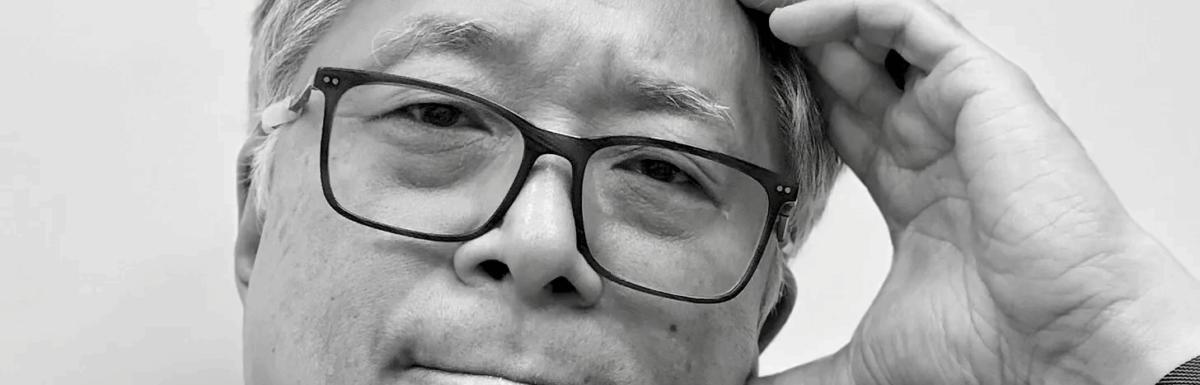
I come from an Asian background and I love me my martial arts, but I can’t claim to be traditional.
My parents only spoke English when I was growing up, and I speak more Spanish than I do Korean. I know more K-pop lyrics than hymns.
But if Confucian humility is a thing, I’ll cop to that.
I know how blessed I’ve been.
If you’re reading this, you and I belong to the true top 1% of humanity. We’re not the wealthiest, but we have the luxury to ponder, to choose between options (we still have options), and to write about our experiences. I’m a physician with a skill set that’s useful anywhere on Earth, and for the last several years, I’ve been blessed with the luxury of worrying about jiu-jitsu.
More broadly, I’ve been studying the challenge of active longevity: staying intensely active outside the window of youth, when we take it for granted that we’re indestructible.
It’s not a bougie vanity project. High intensity activity after age 40—for me, that’s Brazilian jiu-jitsu—becomes vital for many medical reasons: supporting health and fitness, challenging the mind, neutralizing stress, and building camaraderie. All of which adds years to your life and life to your years. (And, in the case of BJJ, modestly but significantly improves your ability to defend yourself.)
It’s particularly challenging if you’re in your 50s and 60s because of the injury potential, which is why I devoted 7 years of my life to finding the magic formula:
Be patient, build resilience and training momentum, and fight the 2-front war of accumulating training longevity plus health longevity. And perhaps ye shall kick ass, though your hair be grey.
Then, my father started to dwindle
Slowly at first, but the last two years have been marked by trips to the ER in the middle of the night, hospitalizations every few weeks, and procedures.
Help with walking, bathing, and eating—the most basic of activities.
Training schedules got obliterated, then rebuilt, finding a BJJ gym that was within minutes of home and work.
I made the time to train, even if only once or twice a week, without breaking off bits.
That was enough.
It was that or go bananas.
Then, the winds calmed
A respite. And the luxury—that word again—to determine if it was possible to do more than dabble.
I found that complementary strength and yoga work were required to decrease injuries, not optional. Trusting in the process enabled me to train twice, then 3, and eventually 5 times a week. Consistent attendance increased my endurance to spar without needing a break, more than I could do when I was five years younger.
I took notes, asked coaches how they trained, and how they kept at it.
It wasn’t about getting medals or titles. I was just happy to train more intensely and consistently than I ever had in my entire life.
Then, it was my mother’s turn
She’s having open-heart surgery tomorrow. For symptoms building over the last few months, culminating in a spectacular episode of swelling and difficulty breathing.
Blown heart valve, a couple of arteries needing a bypass, and an irregular heart rhythm.
The past week has been a scramble with her surgeons, while getting her affairs in order and answering all her questions: my son, the doctor.
Where training time overlapped, training took a back seat. I spent more time cramming about wills and notaries than sweeps and armbars.
The coming months will be a time of adjustment.
And, no, my mother does not get along with the rest of the family.
Simplifying things to the way they “should” be
… sounds like a wonderful option when your world is complicated.
You either view the world as a complex, interlocking place or as an overgrown mess that needs to be simplified. Preferably with a sword.
Whoosh! Cut that emotional vampire out of your life.
Slice! Say goodbye to the 20% of your business causing 80% of your headaches.
Snikt! Want to achieve a measure of greatness? Stop making excuses and get the job done.
Training for a combat sport—or embarking on any new venture at an age when most people are playing doting grandparents—means overcoming medical, physiologic, and logistical hurdles. These are daunting, but emotional and familial entanglements are usually gnarlier.
Acquaintances who ghost you “because you’ve changed.” Imposter syndrome and a waning of motivation, just before taking the most critical step. Family telling you you’re too old, juvenile, or selfish.
Or family getting suddenly, dreadfully ill.
Encountering Obstacles To Change is the most natural, bankable thing in the world.
It’s staying the course, as relentlessly as a machine, that is inhumanly rare.
Taken to an extreme, it can look like this
Kick everyone out of your room to write, or move out to create in solitude.
Alienate anyone who doesn’t support your mission.
Change jobs if your work comes between you and your muse.
Relocate across the country to surround yourself with others seeking what you seek.
I’ve heard of BJJ athletes and parents who have done exactly this because herein lies greatness.
If, you know, greatness is your thing.
How great do you need to be?
I don’t think that appreciating life’s complexity means you can’t also chop to simplify, and vice versa. Life is a hairball, and sometimes the hair needs trimming.
I think it’s more about aiming for greatness vs. aiming for longevity.
Do you need to stand waaay out? Or is it enough for you to be one of the last ones standing?
If you’re aiming for the Moon, that’s synonymous with sacrifice. There’s no way to get far beyond where you currently stand without some major life surgery. The rocket stages that you jettison may be parts of you—or others.
If you’re aiming to have been around the block a few times (and still are), that’s synonymous with experience. And experience often teaches you to not needlessly burn bridges, in fact, to habitually build bridges and relationships.
There’s no action item punchline this time.
Only you can decide what’s right for you at any point in your life.
I will say this, though
There is a cost to juggling life’s complexities, and you can reduce it—sometimes you must reduce it or implode—by cost-cutting.
But there is a cost, a consequence, to cutting.
Chopping things away leads to its own set of ripples.
And if like me your game plan includes being around long enough to accumulate lots of learnings, then eventually you’ll have to deal with those ripples.
Leave a Reply